You are sitting in a dental chair, looking up at the X-ray of a tooth that already had a root canal years ago. Your jaw is tender, the tooth feels loose, and your dentist just gave you the news: the root canal has failed.
Your mind immediately starts racing. Can I just get a dental implant now? Is it even safe to put a titanium screw into an area that was previously infected? Am I going to need a ton of extra surgeries?
Take a deep breath. If you are experiencing structural failure or a recurring infection in a root-canal-treated tooth, you are far from alone—and you have excellent options. Yes, you can absolutely get a dental implant after a root canal. In fact, transitioning to a dental implant is the gold standard solution for a tooth that can no longer be saved with endodontic therapy.
But replacing a treated tooth isn’t always a simple “pull-and-plug” process. The biological history of that tooth—specifically how long it was infected and how much healthy jawbone remains around it—plays a massive role in how your treatment will unfold. Let’s look closely at the data, the procedural steps, and what you can realistically expect during this dental transition.
Root Canal Treatment
A root canal is designed to save a tooth that has become infected or severely damaged. During the procedure, a dentist or endodontist removes infected pulp tissue from inside the tooth, cleans the canals, and seals the space to prevent future infection.
According to the American Association of Endodontists (AAE), root canal treatment has a success rate of approximately 86% to 98%, depending on the condition of the tooth and follow-up restoration.
Many root canal-treated teeth can last decades when properly restored with a crown and maintained through regular dental care.
However, success is not guaranteed forever.
Why Would a Root Canal Tooth Need to Be Replaced?
Several factors can cause a root canal-treated tooth to fail over time.
Common Reasons Include:
1. Recurrent Infection
Bacteria may re-enter the tooth through:
- Cracked fillings
- Damaged crowns
- Missed canals
- New decay
Studies published by the National Institutes of Health (NIH) show that bacterial reinfection remains one of the leading causes of root canal failure.
2. Vertical Root Fractures
Root canal-treated teeth become more brittle because they no longer contain living pulp tissue.
Research published in the Journal of Endodontics indicates that root fractures are a common reason for the extraction of previously treated teeth.
3. Severe Bone Loss
Long-term infection around the root can destroy the supporting bone, making the tooth unstable.
4. Extensive Structural Damage
If too much natural tooth structure has been lost due to decay, trauma, or previous dental work, saving the tooth may no longer be possible.
When these situations occur, extraction followed by implant placement may be recommended.
Can You Get a Dental Implant After a Root Canal?
Absolutely.
If your dentist determines that the root canal-treated tooth cannot be saved through retreatment or surgery, the tooth can be removed and replaced with a dental implant.
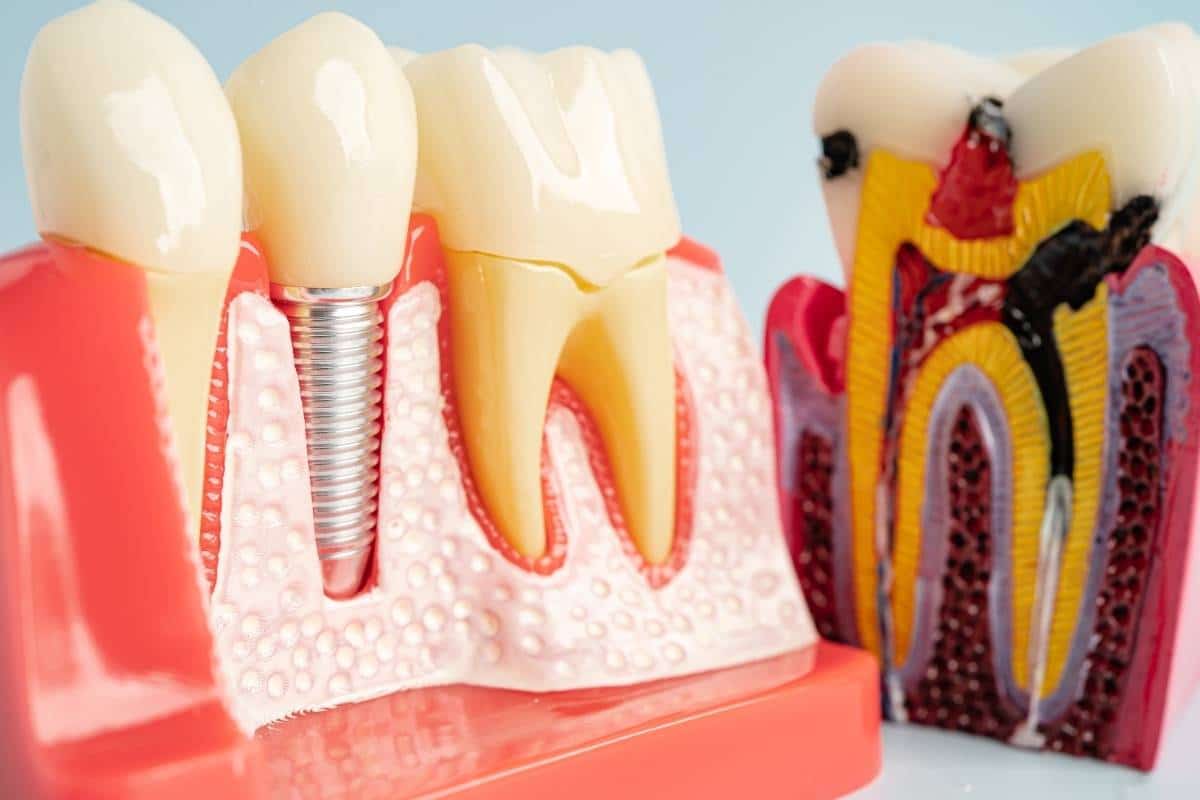
Dental implants are artificial tooth roots made from biocompatible titanium or zirconia materials. They are surgically placed into the jawbone and support crowns, bridges, or dentures.
According to the American Academy of Implant Dentistry (AAID), dental implants have a success rate exceeding 95% in healthy patients.
For many patients, implants provide a stronger and more predictable long-term outcome than repeatedly attempting to save a severely compromised tooth.
When Is an Implant Better Than a Root Canal?
Sometimes a failed root canal can be retreated.
However, retreatment may not always be the best option.
Your dentist may recommend an implant when:
- The tooth is fractured below the gum line
- Significant bone loss is present
- The tooth cannot support a new crown
- Multiple retreatments have already failed
- The prognosis for long-term survival is poor
A comprehensive examination using digital X-rays or CBCT imaging helps determine the most appropriate treatment.
What Is the Process for Getting a Dental Implant After a Root Canal?
Step 1: Evaluation and Treatment Planning
Your dentist evaluates:
- Remaining tooth structure
- Bone quality
- Gum health
- Overall oral health
Advanced 3D imaging often helps identify whether bone grafting is necessary.
Step 2: Tooth Extraction
If the root canal-treated tooth cannot be saved, it is carefully removed.
Modern extraction techniques aim to preserve as much surrounding bone as possible.
Step 3: Bone Grafting (If Needed)
Bone loss is common around failed root canal teeth.
The American Academy of Periodontology notes that bone grafting can rebuild deficient areas and improve implant success.
Healing after bone grafting generally takes:
- 3 to 6 months for minor grafts
- 6 to 9 months for larger grafts
Step 4: Implant Placement
The implant post is surgically inserted into the jawbone.
During healing, a process called osseointegration occurs, where bone fuses directly to the implant surface.
Research published in Clinical Oral Implants Research shows that osseointegration typically requires 3 to 6 months.
Step 5: Crown Placement
Once healing is complete, an abutment and custom crown are attached.
The final restoration is designed to look and function like a natural tooth.
Can an Implant Be Placed Immediately After Extraction?
In some cases, yes.
This procedure is known as an immediate implant placement.
The implant is inserted during the same appointment as the extraction.
Benefits may include:
- Fewer surgical visits
- Reduced treatment time
- Preservation of jawbone volume
However, immediate placement is not suitable for every patient.
Factors that influence eligibility include:
- Presence of infection
- Bone quality
- Gum tissue condition
- Overall health
Your dentist will determine whether immediate or delayed placement is best.
How Successful Are Dental Implants?
Dental implants are among the most predictable procedures in modern dentistry.
According to a systematic review published in the International Journal of Oral & Maxillofacial Implants, implant survival rates often exceed 95% over 10 years.
Additional studies show:
| Implant Statistic | Percentage |
| Average success rate | 95–98% |
| Five-year survival rate | 96–98% |
| Ten-year survival rate | 94–96% |
| Patient satisfaction rate | Over 90% |
These numbers make implants one of the most reliable tooth replacement options available today.
Benefits of Getting a Dental Implant After a Root Canal Failure
- Natural Appearance: Modern implant crowns are custom-made to match neighboring teeth.
- Preserve Jawbone: The American Dental Association (ADA) explains that implants stimulate the jawbone and help prevent bone loss after extraction.
- Long-Term Durability: With proper care, many implants last 20 years or longer.
- Improved Function: Implants restore chewing ability and speech more effectively than removable appliances.
- Protection of Adjacent Teeth: Unlike dental bridges, implants do not require altering neighboring healthy teeth.
Who Is a Good Candidate for Dental Implants?
Most healthy adults are candidates.
Ideal patients generally have:
- Healthy gums
- Adequate bone support
- Good oral hygiene habits
- Controlled medical conditions
Even patients with bone loss may qualify after grafting procedures.
Your dentist will review your medical history and evaluate factors such as:
- Diabetes
- Smoking habits
- Autoimmune conditions
- Medications affecting healing
How Can You Increase Implant Success?
Following these recommendations can improve long-term outcomes:
- Brush twice daily
- Floss around implant restorations
- Attend routine dental visits
- Avoid smoking
- Wear a nightguard if you grind your teeth
- Maintain healthy blood sugar levels
Studies consistently show that smoking significantly increases implant failure risk compared to non-smokers.
What Happens If You Do Nothing After Extraction?
Delaying replacement can create additional oral health concerns.
The ADA notes that missing teeth may lead to:
- Jawbone shrinkage
- Shifting teeth
- Bite problems
- Increased risk of gum disease
- Changes in facial appearance
Replacing a lost tooth promptly often helps preserve oral function and aesthetics.
Conclusion
So, can you get a dental implant after a root canal?
Yes—and for many patients, it is one of the most effective solutions when a root canal-treated tooth can no longer be saved.
While root canal therapy remains highly successful, factors such as reinfection, fractures, and structural damage can sometimes necessitate extraction. Dental implants offer a durable, natural-looking replacement with success rates exceeding 95% in many cases.
If you have a failed root canal or are experiencing pain, swelling, or recurring infection around a previously treated tooth, schedule an evaluation with a local Hutto dentist or implant specialist. Early assessment can help preserve bone, reduce complications, and provide the best opportunity for a successful implant outcome.
Frequently Asked Questions
1. How long after a root canal can I get a dental implant?
If the tooth requires extraction, an implant may be placed immediately or after several months of healing, depending on infection levels and bone quality.
2. Is a dental implant better than repeating a root canal?
It depends on the condition of the tooth. If the tooth can be predictably saved, retreatment may be recommended. If the tooth has a poor prognosis, an implant may provide a more reliable long-term solution.
3. Does implant surgery hurt?
Most patients report minimal discomfort. Local anesthesia and modern surgical techniques make the procedure much more comfortable than many people expect.
4. Can I get an implant if I have bone loss from a failed root canal?
Yes. Bone grafting procedures can often rebuild the jawbone and make implant treatment possible.
5. How long do dental implants last?
With proper care, many dental implants can last 20 years or more, and some remain functional for a lifetime.