Are you considering straightening your teeth but hoping to finish treatment as quickly as possible? If you live in Hutto, Texas, you may be comparing Invisalign clear aligners with traditional braces and wondering which option will straighten your smile faster. Perhaps you want to correct crowded teeth before a special event, or you would prefer an orthodontic treatment that fits more easily into your daily routine.
Invisalign can be faster than braces for some patients, but it isn’t automatically the quicker option for everyone. Treatment time depends on the type and severity of the tooth misalignment, your treatment plan, and how consistently you wear your aligners. Traditional braces may also be more predictable for certain complex tooth movements.
At Advanced Dental Care of Hutto, Dr. Chad Brown can help you understand the differences between clear aligners and braces, what may affect your treatment timeline, and which approach fits your dental needs. Before choosing a treatment, it helps to understand what the research says about speed and effectiveness, and which habits can keep orthodontic treatment on track.
How Long Does Invisalign Take Compared With Braces?
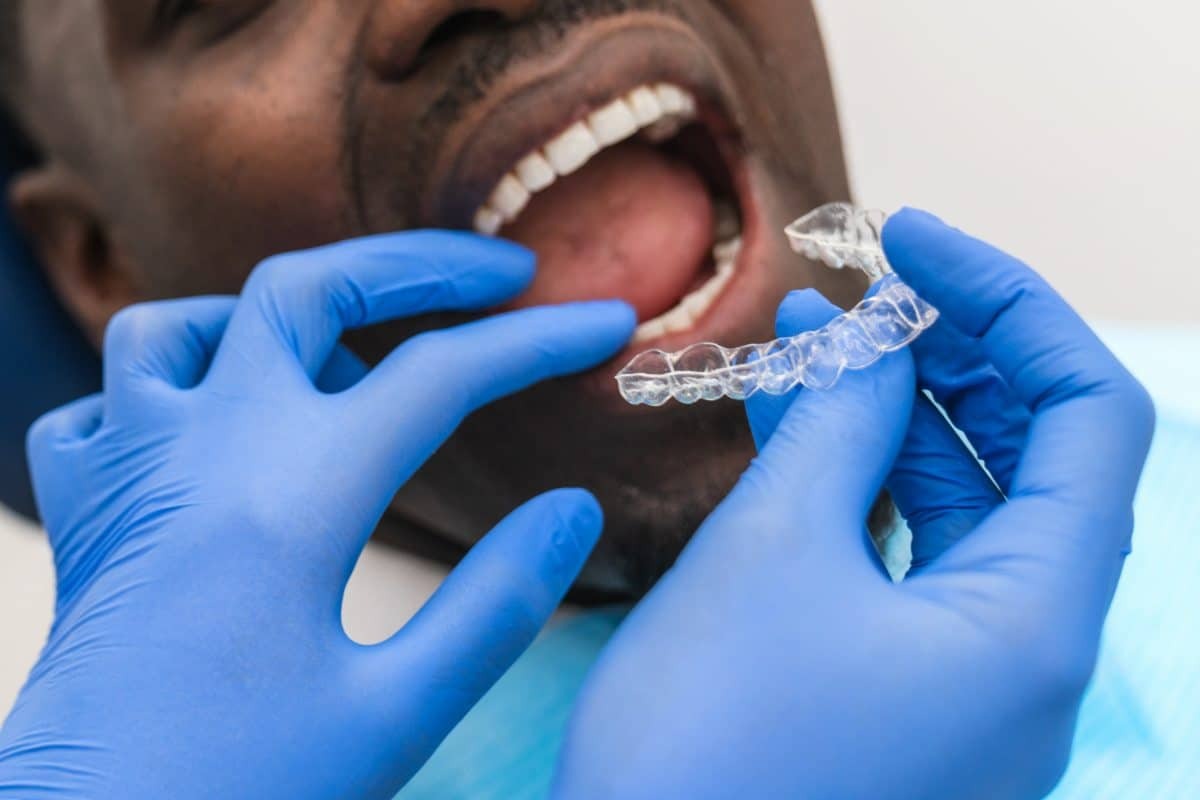
Invisalign in Hutto uses a series of custom-made, removable clear aligners to gradually move teeth. Traditional braces use brackets and wires to apply controlled forces to the teeth.
Both approaches can correct many alignment problems, but treatment time varies by patient.
For some people with mild to moderate crowding, clear aligner treatment may take around 6 to 18 months. More involved cases can take longer. Traditional braces often take about 18 to 24 months, though some finish sooner and others take longer than two years.
These ranges are general estimates, not guaranteed treatment times. A patient with a small gap may need much less time than someone with severe crowding, a complicated bite problem, or teeth that need to move in several directions.
Research also shows no universal winner. A 2024 systematic review published in Scientifica examined 10 studies comparing Invisalign with fixed orthodontic appliances. The authors found similar overall effectiveness in tooth movement and reported a statistically significant reduction in treatment time with Invisalign in their pooled analysis. However, the review also noted that more research is needed to assess long-term stability.
A separate 2024 evidence review focused on adults aged 20–29 with mild to moderately crowded front teeth. It included 718 participants across 10 studies and concluded that treatment duration was likely similar for clear aligners and fixed braces. The authors rated the evidence certainty as low to very low.
The takeaway is straightforward: Invisalign may finish sooner in some situations, but the type of orthodontic problem matters more than the appliance alone.
1. Invisalign May Be Faster for Certain Alignment Problems
Clear aligners can be effective for selected cases involving mild to moderate crowding, spacing, and some bite concerns. Because each set is designed to move teeth in planned stages, patients may progress through their aligners according to a structured schedule.
If your teeth need relatively straightforward movements, Invisalign may offer an efficient treatment option. Digital treatment planning also allows the dental team to map out the intended tooth movements before treatment begins.
However, not all tooth movements are equally predictable with removable aligners. Rotating certain teeth, correcting complex bite relationships, and making substantial changes to tooth position may require additional techniques or a different orthodontic approach.
A 2024 systematic review of clear aligner therapy found that fixed appliances performed better for some movement measurements, while clear aligners remained a useful option for many patients. The review emphasized that more high-quality research is needed.
At Advanced Dental Care of Hutto, Dr. Chad Brown can assess your alignment, bite, and treatment goals to help determine whether Invisalign is a suitable option.
2. Wearing Invisalign as Directed Can Affect Your Timeline
One of the biggest differences between Invisalign and traditional braces is that aligners are removable. That convenience comes with a responsibility: you need to wear them consistently.
Invisalign aligners are typically prescribed for about 20 to 22 hours per day, but you should follow the exact schedule your treating dentist provides. Generally, remove them for meals, drinks other than water, and oral hygiene.
If you frequently leave your aligners out longer than recommended, your teeth may not move as planned. An aligner may stop fitting properly, and you may need additional guidance or refinements.
For example, taking your aligners out for every snack, leaving them on the bathroom counter for hours, or forgetting them while traveling can reduce daily wear time.
Braces stay attached to your teeth, so they keep applying force without requiring you to remember to put them back in. That can be an advantage for patients who find it difficult to maintain the daily routine required for aligners.
If your goal is to finish Invisalign as efficiently as possible, consistent wear is essential. Your dentist’s instructions should guide when you change aligners and what to do if a tray no longer fits.
3. Braces May Be More Efficient for Complex Cases
Traditional braces are often recommended for cases that require more complex tooth movement or detailed bite correction. Because brackets are bonded to the teeth and connected by wires, the treating clinician can adjust them to control different types of movement.
Braces may be particularly helpful when treatment involves significant rotations, complicated bite relationships, or tooth movements that are harder to achieve predictably with aligners alone.
This does not mean Invisalign cannot treat complex cases. Some patients can achieve good results with clear aligners, plus attachments or other techniques. The key question is whether the chosen method can reliably achieve the desired result in your case.
Choosing an option solely because it appears faster may not be the best strategy. A treatment that takes a little longer but corrects your bite may be better than a shorter plan that doesn’t meet your clinical needs.
4. Missed Appointments and Refinements Can Extend Treatment
Invisalign and braces both require follow-up care. These appointments let the dental team check progress, evaluate how the teeth are responding, and make adjustments as needed.
With Invisalign, the dentist may assess whether the teeth are tracking with the aligners. If some teeth are not moving as expected, additional aligners or refinements may be needed.
With braces, visits let the clinician adjust wires, replace components as needed, and monitor tooth movement.
Unexpected delays can occur with either treatment. A broken bracket, a lost aligner, inconsistent wear, or the need for additional tooth movements may extend the original timeline.
Therefore, treatment length should account for more than the estimated number of aligners or the expected time between brace adjustments. The final result and bite stability also matter.
Attending scheduled appointments and following your dentist’s instructions can help avoid preventable delays.
5. Invisalign Can Make Eating and Cleaning Easier
Although convenience doesn’t automatically speed up treatment, it can improve how well patients follow their treatment plan.
You remove Invisalign aligners for meals, so you can generally keep eating your usual foods without worrying about damaging brackets. Brush your teeth before putting the aligners back in, and clean the trays as instructed.
Traditional braces require more care around food choices. Hard, sticky, or chewy foods can damage brackets or wires, which may require an additional appointment. Brushing and flossing also take extra attention because food and plaque can collect around the hardware.
Clear aligners can simplify oral hygiene for some patients, but they still require consistent cleaning and wear. Wearing trays over teeth that have not been cleaned after eating can trap food debris and contribute to dental problems.
Neither option eliminates the need for good oral hygiene. Healthy gums and teeth matter throughout orthodontic treatment, no matter which method you choose.
6. Your Starting Dental Condition Matters
Two people can choose the same orthodontic treatment and finish at very different times because their teeth do not start in the same position.
Factors that may influence treatment duration include:
- The amount of crowding or spacing.
- Whether the bite needs correction.
- The direction and distance teeth must move.
- Whether extractions or other dental procedures are needed.
- How consistently the patient follows instructions.
- The body’s individual response to orthodontic forces.
Age alone does not determine whether Invisalign will be faster than braces. Adults can receive orthodontic treatment, but the plan must account for their oral health, existing dental work, and the movements required.
Before recommending an option, your dentist should examine your teeth and bite and discuss realistic expectations. A digital scan or other diagnostic records may be used when appropriate to help plan treatment.
7. Retainers Help Protect Your Results After Treatment
Finishing Invisalign or braces doesn’t mean your teeth will stay in their new positions without further care. Teeth can shift after orthodontic treatment, so retainers are an important part of maintaining the result.
Your dentist will recommend a retention plan suited to your treatment. This may involve a removable retainer, a fixed retainer, or a combination of approaches.
A 2025 systematic review of clear aligner treatment stability examined six studies selected from 112 records. The authors reported promising results for clear aligners, particularly in mild crowding and front-tooth movements, but also noted variation in treatment accuracy and limited long-term follow-up.
Retainers usually don’t shorten the active treatment phase, but they help protect the results you worked to achieve. Wearing them as instructed can reduce the chance that you will need additional orthodontic correction later.
Invisalign vs. Braces: Which Is the Better Choice in Hutto?
The best option fits your dental needs, daily routine, and ability to follow treatment instructions. Invisalign may appeal if you want removable, discreet aligners and your tooth movement is suitable for that method. Braces may be more appropriate if your case needs more complex control or if you would find it difficult to wear removable aligners consistently.
At Advanced Dental Care of Hutto, Dr. Chad Brown can discuss your concerns, assess your teeth and bite, and explain the likely treatment timeline for the options appropriate to you.
Instead of relying on a general claim that one method is always faster, ask what needs to change in your bite, what the expected timeline is, and what could delay your specific treatment.
Conclusion
Can Invisalign really straighten your teeth faster than braces? Sometimes, but not always. Research suggests clear aligners may shorten treatment for some patients, while other evidence indicates treatment time can be similar for mild to moderate crowding. Braces may also provide more predictable control for some complex tooth movements.
Your starting alignment, bite concerns, daily aligner wear, follow-up visits, and need for refinements all influence how long treatment takes. The most effective plan achieves the right result while fitting your needs and routine.
If you are considering Invisalign or traditional braces in Hutto, Dr. Chad Brown at Advanced Dental Care of Hutto can help you understand your options and discuss a realistic treatment timeline.
Visit our dental practice in Hutto. Book now to schedule your appointment with our team.
Frequently Asked Questions
1. What dental services does your practice provide?
Our dental practice offers a range of services to meet patients’ needs. Contact Advanced Dental Care of Hutto to learn more about available treatments and discuss which options may be appropriate for you.
2. How often should I visit the dentist?
Many patients benefit from routine dental checkups about every six months, but the recommended schedule varies according to oral health and individual risk factors. Patients undergoing orthodontic treatment also need follow-up appointments as directed by their treating clinician.
3. Is Invisalign suitable for every patient?
No. Invisalign can treat many alignment problems, but it is not the best option for every case. Our dentist can examine your teeth and bite to determine whether clear aligners or braces better suit your needs.
4. Does Invisalign hurt?
You may feel pressure or temporary soreness when you begin wearing a new set of aligners because the trays are designed to move your teeth. Discomfort varies by patient and often improves as you adjust. Contact your dentist if pain is severe or persistent.
5. Do I need to wear a retainer after Invisalign or braces?
Yes, most patients need retainers after active orthodontic treatment to help keep their teeth in the corrected positions. Our dentist will explain the recommended retainer type and wearing schedule for your situation.