
Let’s be real for a second: as a parent, your “to-do” list is already long enough without adding “Wrestle a terrified toddler into a dental chair” to the mix. We’ve all been there—the sweaty palms, the trembling lip, and that tiny voice asking, “Will it hurt?” You want your child to have a healthy smile, but you also don’t want them to be traumatized for life by a routine filling.
What if we told you that dental visits don’t have to be a battle of wills? In the United States, pediatric dentists are increasingly using safe, modern sedation techniques to help kids—and their parents—breathe a sigh of relief. But how does it actually work? Is it safe? And just how common is dental anxiety anyway?
Grab a cup of coffee and settle in. We’re diving into the data, the science, and the “parent-approved” ways sedation is changing the game for kids’ dental health.
Why Dental Anxiety Matters (Especially in Children)
Dental anxiety isn’t just “being a little nervous.” It’s a real psychological and behavioral response that can impact a child’s oral health for years. Studies show that dental fear starts early and shapes attitudes toward care throughout life. Up to 10–20% of people avoid dental care as adults because of anxiety that started in childhood.
Let’s break it down:
- Up to 24–27% of children exhibit significant dental fear when assessed with standard tools such as the Children’s Fear Survey Schedule.
- Dental anxiety is more common in younger children and is often higher in girls than in boys.
- Fear often starts with a bad experience — such as pain, loud instruments, or even past memories of needles.
When fear wins, kids may avoid the dentist completely — which can lead to untreated cavities, painful infections, missed school days, and even systemic health issues down the line. That’s where sedation can change everything.
The Reality of Dental Anxiety
If your child is afraid of the dentist, they are far from alone. According to research published in the Journal of the American Dental Association and studies highlighted by the American Academy of Pediatric Dentistry (AAPD), dental fear and anxiety (DFA) affect a significant portion of the pediatric population.
- Prevalence: Studies show that dental anxiety affects between 5% to 30% of children in the United States, depending on the age group and assessment method used.
- The “Cycle of Avoidance”: Approximately 50% of children with high dental fear fall into a “cycle of avoidance,” skipping routine cleanings, which can lead to more complex—and potentially painful—emergencies later.
- Age Matters: Younger children (ages 2–5) are statistically more likely to exhibit situational anxiety because they lack the cognitive maturity to process the “scary” sounds and sights of a dental office.
How Sedation Acts as a “Stress Buffer”
Sedation isn’t just about “putting a kid to sleep.” In fact, most pediatric dental sedation is designed to keep your child conscious and responsive, just much more relaxed. Here is how it helps overcome the psychological hurdles of the dental chair:
- It Dampens the Sensory Overload: Our dental office is a sensory minefield: bright lights, high-pitched whirring, and unusual smells. For a child with sensory sensitivities or ADHD, this can trigger a “fight or flight” response. Sedation helps “turn down the volume” on these stimuli, making the environment feel neutral rather than threatening.
- It Provides Amnesic Effects: Some forms of sedation, particularly oral conscious sedation (like midazolam), have a “mild amnesic” effect. This means your child is likely to forget the specifics of the procedure. Research indicates that children who don’t remember the “scary” parts of a visit are 60% more likely to be cooperative at their next appointment.
- It Stops the “Fidget Factor”: For many kids, the anxiety stems from the struggle to stay still. Sedation relaxes the muscles and reduces the urge to squirm. This allows the dentist to work 25% to 40% faster, meaning your child spends less time in the chair and more time picking out a prize from the treasure chest.
Common Types of Pediatric Sedation
The American Academy of Pediatrics (AAP) and the AAPD have strict guidelines to ensure sedation is safe. Here are the three most common levels used in U.S. clinics:
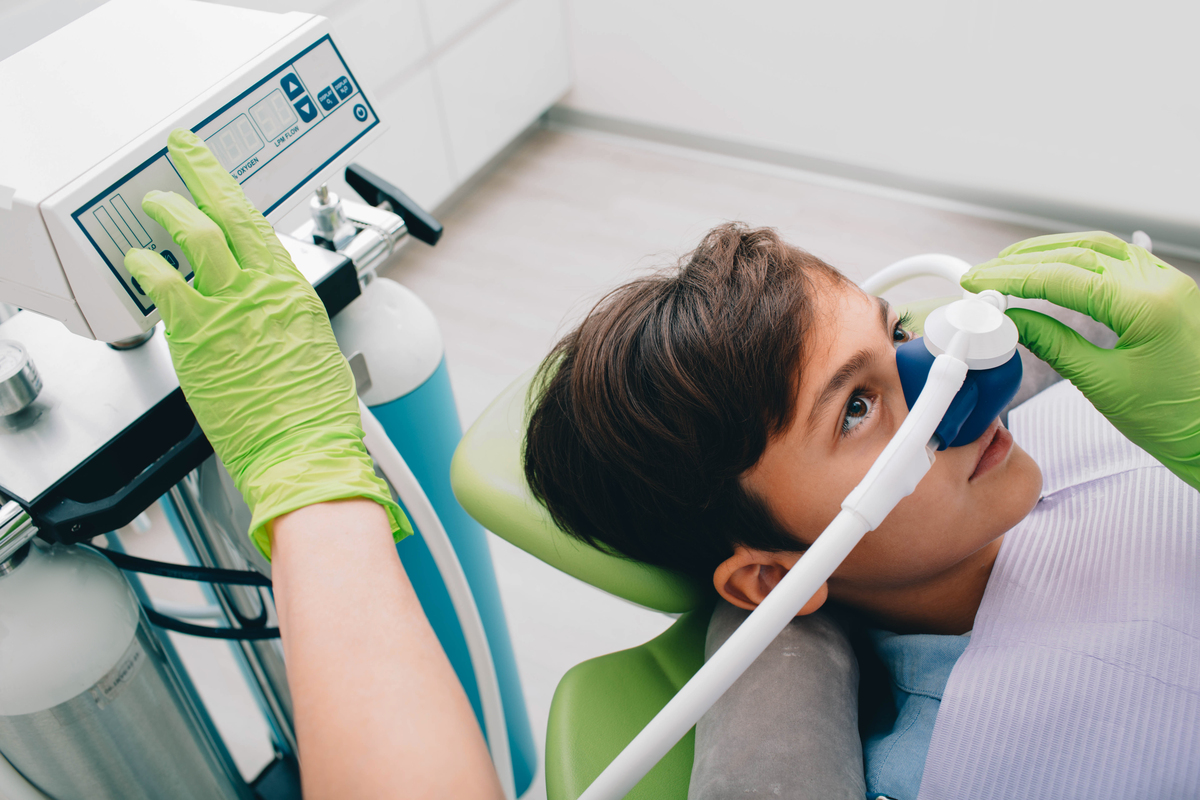
Level 1: Nitrous Oxide (Laughing Gas)
This is the “gold standard” for mild anxiety.
- How it works: Inhaled through a flavored mask (strawberry is a fan favorite!).
- Data Point: Roughly 87% of pediatric dentists use nitrous oxide for “selected patients” to manage mild to moderate fear.
- Recovery: It wears off within 5 minutes of breathing pure oxygen, meaning your kid can go right back to school.
Level 2: Oral Conscious Sedation
For kids who need a bit more “chill” than gas can provide.
- How it works: A liquid or pill is taken about 30–45 minutes before the procedure.
- The Science: A meta-analysis of 50 studies found that oral midazolam significantly improved cooperative behavior compared with placebo, with a “standardized mean difference” (SMD) of 1.96, indicating very high effectiveness.
Level 3: IV Sedation or General Anesthesia
Reserved for extensive work (like multiple crowns) or children with extreme phobias/special needs.
- The Trend: There has been an 88% increase in requests for specialist dental anesthesiologists over the last decade as parents seek “one-and-done” appointments for complex dental rehabilitation.
How Sedation Helps Kids Beyond “Just Relaxing”
Sedation does more than reduce squirming in the dental chair — it has real emotional and developmental impact:
- Reduces Emotional Trauma: Unpleasant dental experiences can linger in a child’s memory, leading to long-term dental avoidance or panic later in life. Sedation allows for gentler, fear-free treatment that reduces the risk of trauma.
- Helps Build Trust: A child who experiences a calm dental visit is more likely to trust dental professionals in the future. Confidence builds from positive experiences — especially early in life.
- Safer Treatments: When a child is relaxed and still, dentists can work more efficiently and accurately, minimizing the risk of injury or incomplete treatment.
- Works Alongside Behavioral Techniques: Sedation doesn’t replace good communication or child-friendly behavior management — it enhances them. Many pediatric dentists combine sedation with storytelling, distraction tools, and familiar comforts to make visits smoother.
When Is Sedation Typically Recommended?
Pediatric dentists don’t prescribe sedation for every visit — but the leading reasons include:
- A child with extreme anxiety or panic
- A child who is very young and unable to sit still
- Extended or complex treatment (crowns, multiple fillings, extractions)
- Children with special needs or developmental challenges
- Previous negative responses to dental treatment
Research suggests that between 5% and 10% of children may require some form of sedation during dental care because of anxiety or behavior challenges.
This is especially true when traditional techniques like “tell-show-do” or distraction aren’t enough.
Safety First: How Sedation Is Monitored
Safety is the top priority in pediatric sedation. That’s why:
- Sedation is administered by trained professionals (often specially licensed pediatric dentists in Hutto)
- Vital signs (heart rate, oxygen levels, breathing) are continuously monitored
- Families receive detailed pre- and post-procedure instructions
Studies show that, when proper protocols are followed, sedation significantly enhances patient comfort with minimal risk. Careful screening and dosing help reduce complications.
Sedation Vs. Avoidance: A Key Turning Point
Dental anxiety doesn’t just affect behavior at the dentist. It influences:
- School attendance
- Oral health outcomes
- Self-confidence
- Mouth pain and discomfort
According to a major review, dental fear often develops in childhood and persists into adulthood unless properly addressed — meaning that early intervention with techniques like sedation can change a child’s dental trajectory for life.
What Parents Can Do Before Sedation
Before considering sedation, many pediatric dentists recommend:
- A pre-appointment visit to familiarize your child with the office
- Practice “tell-show-do” at home using toys and mirror explanations
- Bring a favorite book, stuffed animal, or comfort item
- Ask your dentist to explain exactly what type of sedation they recommend and why
These steps can enhance sedation and make the overall experience feel more positive.
What Happens After Sedation?
Most children recover quickly, depending on the type of sedation used:
- Nitrous oxide wears off almost immediately after the mask is removed.
- Oral or intranasal sedation may take several hours for your child to feel fully alert — during which time, monitoring and a calm environment at home matter.
Your qualified dentist in Hutto will provide guidelines for eating, activity, and observation after sedation.
Conclusion
At the end of the day, sedation is simply a tool that helps us bridge the gap between a fearful child and a healthy mouth. By reducing the physiological and psychological impact of dental fear, we aren’t just “getting through” a filling—we are teaching your child that the dentist isn’t a place to be feared.
When we remove the trauma, we set the foundation for a lifetime of healthy habits. After all, a “brave” smile is much easier to maintain when you have a little help from modern science!
Frequently Asked Questions
1. Is sedation safe for kids?
Yes — when administered by trained professionals with proper monitoring, sedation is considered safe and effective for children, with risks minimized through screening and supervision.
2. Will my child be unconscious?
Not necessarily. Most sedation methods (such as nitrous oxide or oral sedation) keep your child awake but relaxed, responsive, and comfortable.
3. How long does sedation last?
It depends on the type. Nitrous oxide wears off fast, while oral or intranasal sedation may take a few hours to fully wear off. Your dentist will give you instructions.
4. Does sedation cure dental anxiety forever?
Sedation helps overcome immediate fear and supports positive experiences, but it’s most effective when paired with behavior strategies and repeated positive visits.
5. Will insurance cover sedation?
Coverage varies widely. Some insurance plans cover sedation for medically necessary cases — talk to your dentist and insurance provider ahead of time.
